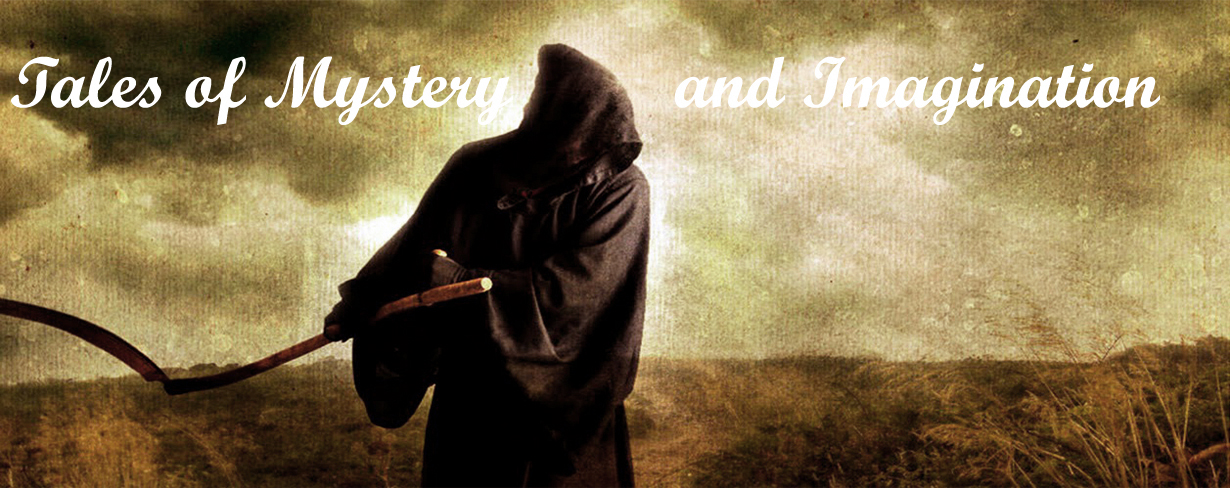
“Once again...welcome to my house. Come freely. Go safely; and leave something of the happiness you bring.” (Bram Stoker, Dracula)


Wednesday, June 19, 2013

Ray Bradbury: Death and the Maiden


Far out in the country beyond the woods, beyond the world, really, lived Old Mam, and she had lived there for ninety years with the door locked tight, not opening for anyone, be it wind, rain, sparrow tapping or little boy with a pailful of crayfish rapping. If you scratched at her shutters, she called through:
"Go away. Death!"
"I'm not Death!" you might say.
But she'd cry back, "Death, I know you, you come today in the shape of a girl. But I see the bones behind the freckles!"
Or someone else might knock.
"I see you. Death." would cry Old Mam. "In the shape of a scissors-grinder! But the door is triple-locked and double-barred. I got flypaper on the cracks, tape on the keyholes, dust mops up the chimney, cobwebs in the shutters, and the electricity cut off so you can't slide in with the juice! No telephones so you can call me to my doom at three in the dark morning. And I got my ears stuffed with cotton so I can't hear your reply to what I say now. So, Death, get away!"

Emilia Pardo Bazán: La emparedada


Reclinada sobre tapices persas, pálida y triste, entre humaredas de pebeteros que la envuelven en nubes de exóticos inciensos y violentos sahumerios orientales, la zarina tiembla, pues va a regresar su esposo, su terrible esposo, de la guerra o de la caza. Y cuando regrese, sufrirá la zarina el suplicio de la marmórea indiferencia y el desdén brutal con que la mira y la trata su dueño, harto de su hermosura y airado contra la mujer que no consigue atraerle a sus brazos.

¿Por qué la aborrece el zar? La zarina lo ignora. Sus espejos de plata bruñida le dicen que es bella. Su caudalosa mata de pelo, color de cobre limpio, ondea y se encrespa hasta el borde del pesado caftán de terciopelo verde recamado de oro. Sus perfectas facciones parecen cinceladas, como suelen parecer las de sus paisanas, las hijas de la Georgia. Su piel clara brilla con dulce resplandor nacarino. Sus manos son tan delicadas y prolongadas como las de la icona de marfil que se yergue dentro de una hornacina, al pie del lecho. Sabe tañer, sabe cantar, y ella misma compone los versos de sus melancólicas querellas. ¿Por qué el zar la aborrece? No se atreve a preguntárselo. Quizá no lo sepa él mismo. Hay sentimientos cuyo origen desconoce el alma donde reinan.

Dino Buzzati: Il mantello


Dopo interminabile attesa quando la speranza già cominciava a morire, Giovanni ritornò alla sua casa. Non erano ancora suonate le due, sua mamma stava sparecchiando, era una giornata grigia di marzo e volavano cornacchie.
Egli comparve improvvisamente sulla soglia e la mamma gridò: «Oh benedetto!» correndo ad abbracciarlo. Anche Anna e Pietro, i due fratellini molto più giovani, si misero a gridare di gioia. Ecco il momento aspettato per mesi e mesi, così spesso balenato nei dolci sogni dell'alba, che doveva riportare la felicità.
Egli non disse quasi parola, troppa fatica costandogli trattenere il pianto. Aveva subito deposto la pesante sciabola su una sedia, in testa portava ancora il berretto di pelo. «Lasciati vedere» diceva tra le lacrime la madre, tirandosi un po' indietro «lascia vedere quanto sei bello. Però sei pallido, sei.»
Era alquanto pallido infatti e come sfinito. Si tolse il berretto, avanzò in mezzo alla stanza, si sedette. Che stanco che stanco, perfino a sorridere sembrava facesse fatica. «Ma togliti il mantello, creatura» disse la mamma, e lo guardava come un prodigio, sul punto d'esserne intimidita; com'era diventato alto, bello fiero (anche se un po' troppo pallido). «Togliti il mantello, dammelo qui, non senti che caldo?» Lui ebbe un brusco movimento di difesa, istintivo, serrandosi addosso il mantello, per timore forse che glielo strappassero via.
«No, no lasciami» rispose evasivo «preferisco di no, tanto tra poco devo uscire...»

Edward Frederic Benson: The temple


Frank Ingleton and I had left London early in July with the intention of spending a couple of months at least in Cornwall. This sojourn was not by any means to be a complete holiday, for he was a student of those remains of prehistoric civilisation which are found in such mysterious abundance in the ancient county, and I was employed on a book which should have already been approaching completion, but which was still lamentably far from its consummation. Naturally there was to be a little golf and a little sea-bathing for relaxation, but we were both keen on our work and meant to have gathered in a respectable harvest of industry before we returned.

The village of St. Caradoc, from all accounts, seemed likely to be favourable to our projects, for there were remains in the neighbourhood which had never been thoroughly investigated by any archæologist, and its position on the map, remote from any of the more celebrated holiday centres, promised a reasonable tranquillity. It supplied also the desirable relaxations; the club-house of a pleasantly hazardous golf-course stood at the bottom of the hotel garden, and five minutes' walk across the sand-dunes among which the holes were placed, led to the beach. The hotel was comfortable, and at present half-empty, and fortune seemed to smile on our undertakings. We settled down, therefore, without further plans. Frank meant, before he left, to visit other parts of the county, but here, within a mile of the hotel, was that curious circle of monoliths, like some Stonehenge in miniature, known as the "Council of Penruth." It had always been supposed, so Frank told me, that it was some place of Druidical worship, but he distrusted the conclusion and wanted to study it minutely on the spot.

Tuesday, June 18, 2013

Álvaro Yunque: La obra maestra


El mono agarró un tronco de árbol, lo subió hasta el más alto pico de una sierra, lo dejó allí, y cuando bajó al llano, explicó a los demás animales.
—¿Ven aquello que está allá? ¡Es una estatua, una obra maestra! La hice yo.
Y los animales, mirando aquello que veían allá en lo alto, sin distinguir bien qué fuere, comenzaron a repetir que aquello era una obra maestra. Y todos admiraron al mono como a un gran artista. Todos menos el cóndor, porque el cóndor era el único que podía volar hasta el pico de la sierra y ver que aquello sólo era un viejo tronco de árbol. Dijo a muchos lo que había visto; pero ninguno creyó al cóndor, porque es natural en el ser que camina no creer al que vuela.

Franz Kafka: In der Strafkolonie


»Es ist ein eigentümlicher Apparat«, sagte der Offizier zu dem Forschungsreisenden und überblickte mit einem gewissermaßen bewundernden Blick den ihm doch wohlbekannten Apparat. Der Reisende schien nur aus Höflichkeit der Einladung des Kommandanten gefolgt zu sein, der ihn aufgefordert hatte, der Exekution eines Soldaten beizuwohnen, der wegen Ungehorsam und Beleidigung des Vorgesetzten verurteilt worden war. Das Interesse für diese Exekution war wohl auch in der Strafkolonie nicht sehr groß. Wenigstens war hier in dem tiefen, sandigen, von kahlen Abhängen ringsum abgeschlossenen kleinen Tal außer dem Offizier und dem Reisenden nur der Verurteilte, ein stumpfsinniger breitmäuliger Mensch mit verwahrlostem Haar und Gesicht, und ein Soldat zugegen, der die schwere Kette hielt, in welche die kleinen Ketten ausliefen, mit denen der Verurteilte an den Fuß- und Handknöcheln sowie am Hals gefesselt war und die auch untereinander durch Verbindungsketten zusammenhingen. Übrigens sah der Verurteilte so hündisch ergeben aus, daß es den Anschein hatte, als könnte man ihn frei auf den Abhängen herumlaufen lassen und müsse bei Beginn der Exekution nur pfeifen, damit er käme.
Der Reisende hatte wenig Sinn für den Apparat und ging hinter dem Verurteilten fast sichtbar unbeteiligt auf und ab, während der Offizier die letzten Vorbereitungen besorgte, bald unter den tief in die Erde eingebauten Apparat kroch, bald auf eine Leiter stieg, um die oberen Teile zu untersuchen. Das waren Arbeiten, die man eigentlich einem Maschinisten hätte überlassen können, aber der Offizier führte sie mit einem großen Eifer aus, sei es, daß er ein besonderer Anhänger dieses Apparates war, sei es, daß man aus anderen Gründen die Arbeit sonst niemandem anvertrauen konnte. »Jetzt ist alles fertig!« rief er endlich und stieg von der Leiter hinunter. Er war ungemein ermattet, atmete mit weit offenem Mund und hatte zwei zarte Damentaschentücher hinter den Uniformkragen gezwängt. »Diese Uniformen sind doch für die Tropen zu schwer«, sagte der Reisende, statt sich, wie es der Offizier erwartet hatte, nach dem Apparat zu erkundigen. »Gewiß«, sagte der Offizier und wusch sich die von Öl und Fett beschmutzten Hände in einem bereitstehenden Wasserkübel, »aber sie bedeuten die Heimat; wir wollen nicht die Heimat verlieren. – Nun sehen Sie aber diesen Apparat«, fügte er gleich hinzu, trocknete die Hände mit einem Tuch und zeigte gleichzeitig auf den Apparat. »Bis jetzt war noch Händearbeit nötig, von jetzt aber arbeitet der Apparat ganz allein.« Der Reisende nickte und folgte dem Offizier. Dieser suchte sich für alle Zwischenfälle zu sichern und sagte dann: »Es kommen natürlich Störungen vor; ich hoffe zwar, es wird heute keine eintreten, immerhin muß man mit ihnen rechnen. Der Apparat soll ja zwölf Stunden ununterbrochen im Gang sein. Wenn aber auch Störungen vorkommen, so sind sie doch nur ganz kleine, und sie werden sofort behoben sein.«

Juan Rulfo: ¡Diles que no me maten!


-¡Diles que no me maten, Justino! Anda, vete a decirles eso. Que por caridad. Así diles. Diles que lo hagan por caridad.

-No puedo. Hay allí un sargento que no quiere oír hablar nada de ti.

-Haz que te oiga. Date tus mañas y dile que para sustos ya ha estado bueno. Dile que lo haga por caridad de Dios.

-No se trata de sustos. Parece que te van a matar de a de veras. Y yo ya no quiero volver allá.

-Anda otra vez. Solamente otra vez, a ver qué consigues.

-No. No tengo ganas de eso, yo soy tu hijo. Y si voy mucho con ellos, acabarán por saber quién soy y les dará por afusilarme a mí también. Es mejor dejar las cosas de este tamaño.

-Anda, Justino. Diles que tengan tantita lástima de mí. Nomás eso diles.

Justino apretó los dientes y movió la cabeza diciendo:

-No.

Related Posts Plugin for WordPress, Blogger...